
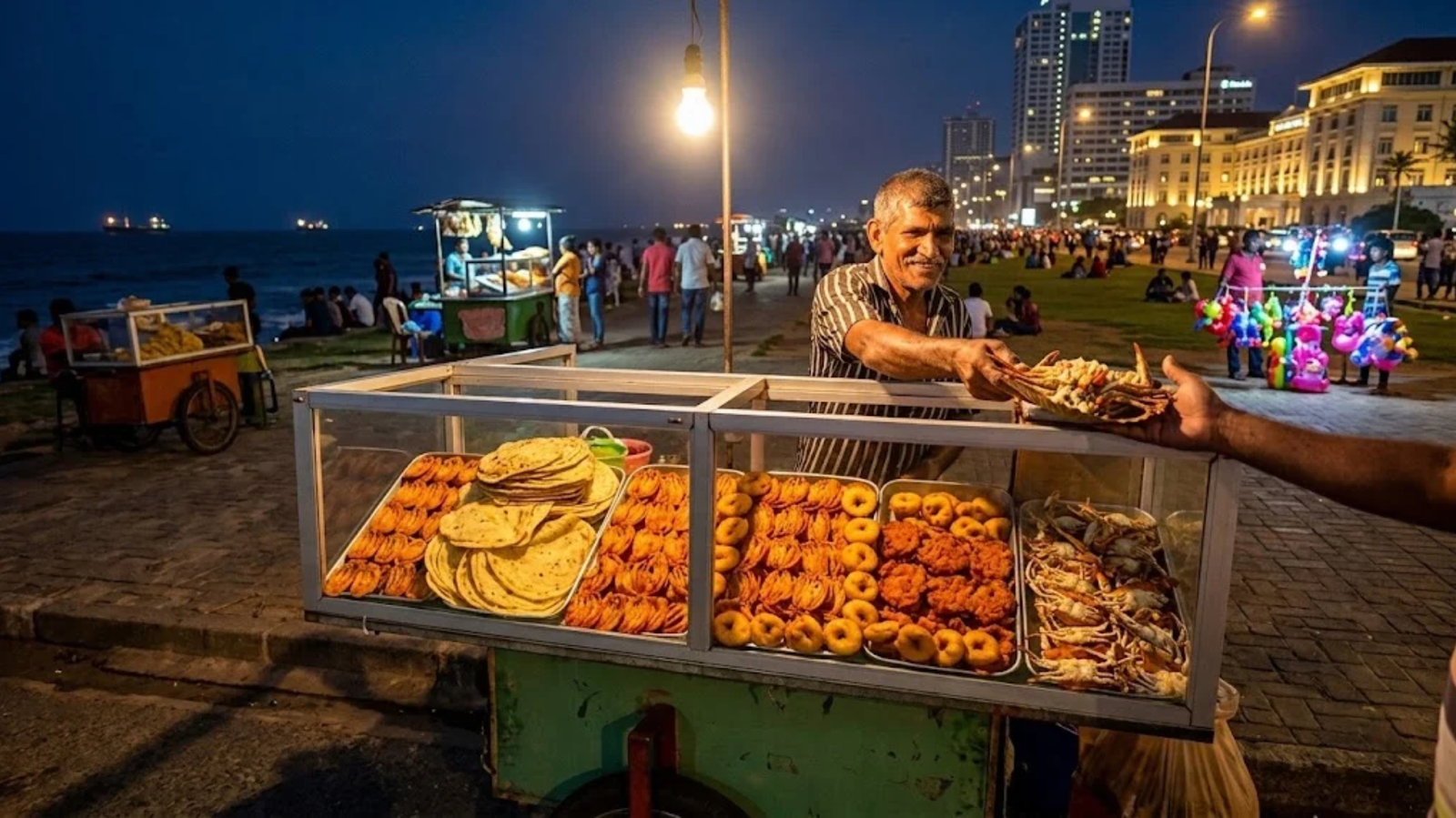
Follow your nose down any busy street in Sri Lanka, and it will lead you somewhere good, a sizzling griddle, a pot of curry bubbling over an open flame, or a stack of banana leaves waiting to be filled. Sri Lankan street food isn’t just a meal, it’s how the island tells its story: spicy, colorful, and made to be shared.
Whether you’re wandering through Colombo’s busy lanes or stopping at a small roadside cart in the countryside, here’s everything you need to know about the must-try street foods of Sri Lanka what they are, what they taste like, and where to find them.
Why Sri Lankan Street Food Is Worth Seeking Out
Sri Lankan cuisine blends influences from South Indian, Malay, Dutch, and Arab traders, shaped over centuries into something entirely its own. Street food here isn’t a “lesser” version of restaurant dining for many locals, it’s the main event.
What makes it special:
- Bold use of spices like curry leaves, pandan, and cinnamon (Sri Lanka’s own native spice)
- Coconut in almost everything: milk, sambol, oil
- Food cooked fresh, right in front of you, often within minutes of ordering
- Prices that make it easy to try a little bit of everything
Must-Try Sri Lankan Street Foods
1. Kottu Roti
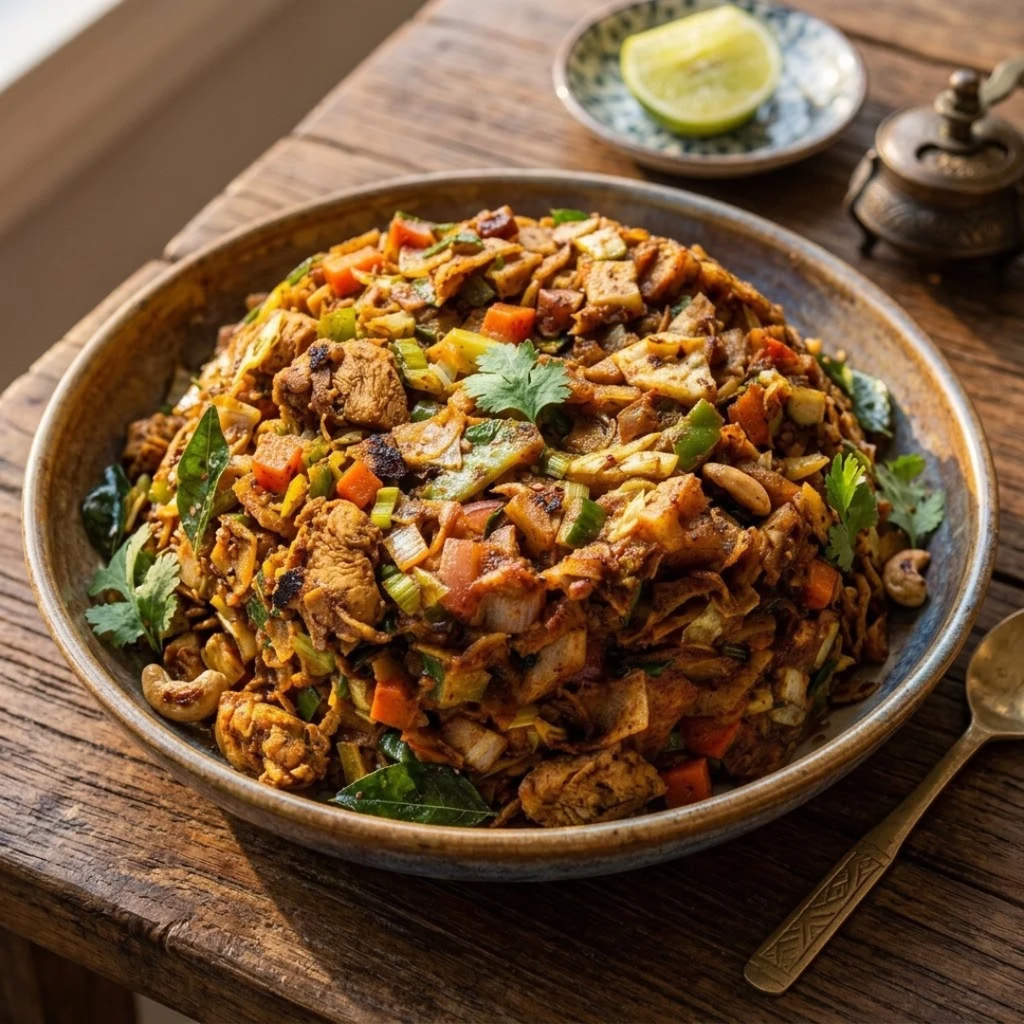
If Sri Lanka has a signature street food sound, it’s the rhythmic clang-clang-clang of metal blades chopping roti on a hot griddle. Kottu roti is shredded flatbread stir-fried with vegetables, egg, and your choice of chicken, beef, or seafood, all tossed together with a rich, spiced curry sauce.
- What it tastes like: Smoky, spicy, and deeply savory, comfort food at its best
- Where to find it: Almost anywhere after dark; look for the sound before you see the stall
2. Isso Wade (Prawn Fritters)
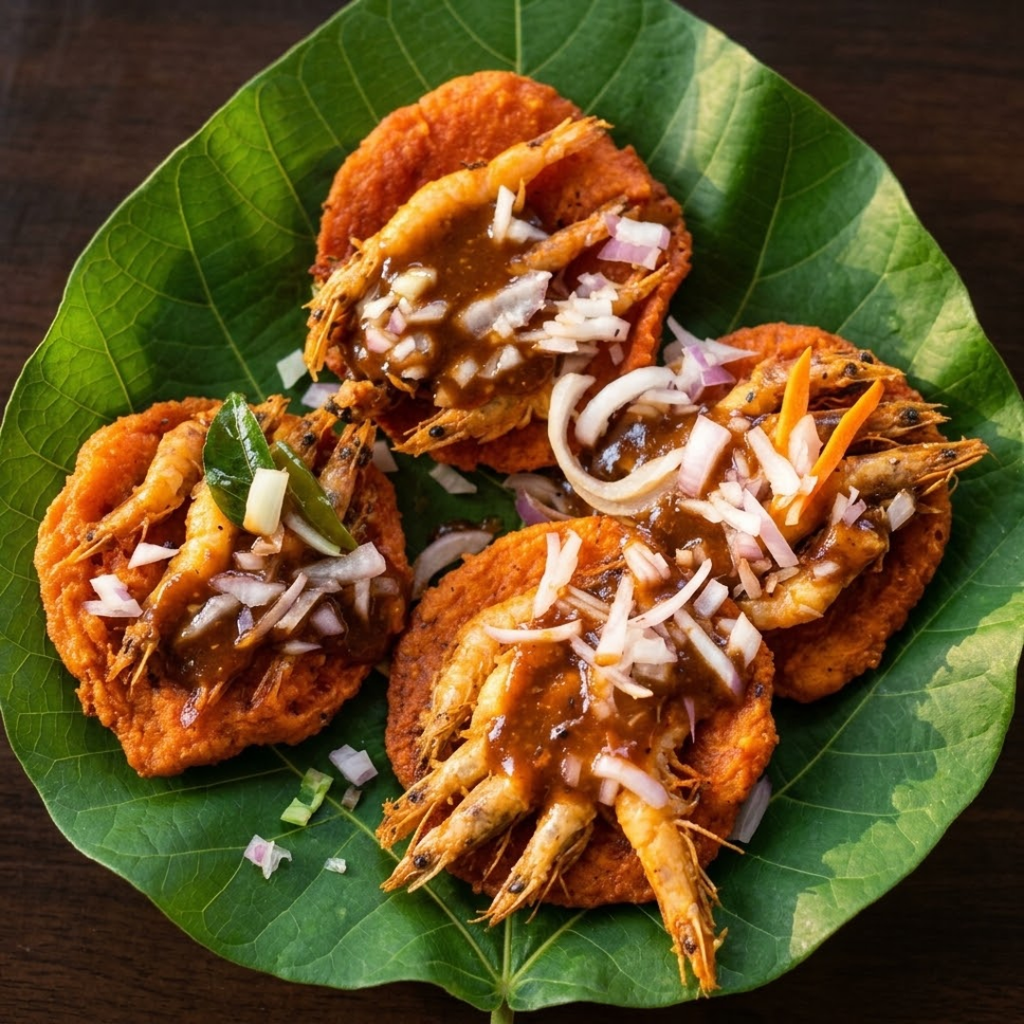
Crispy, golden, and studded with a whole prawn on top, isso wade are deep-fried lentil fritters sold by beach vendors up and down the coast, especially in Galle, Mirissa, and Colombo’s Galle Face Green.
- What it tastes like: Crunchy on the outside, spiced and slightly chewy inside
- Best paired with: A cold ginger beer, watching the sunset over the ocean
3. Hoppers (Appa) and Egg Hoppers
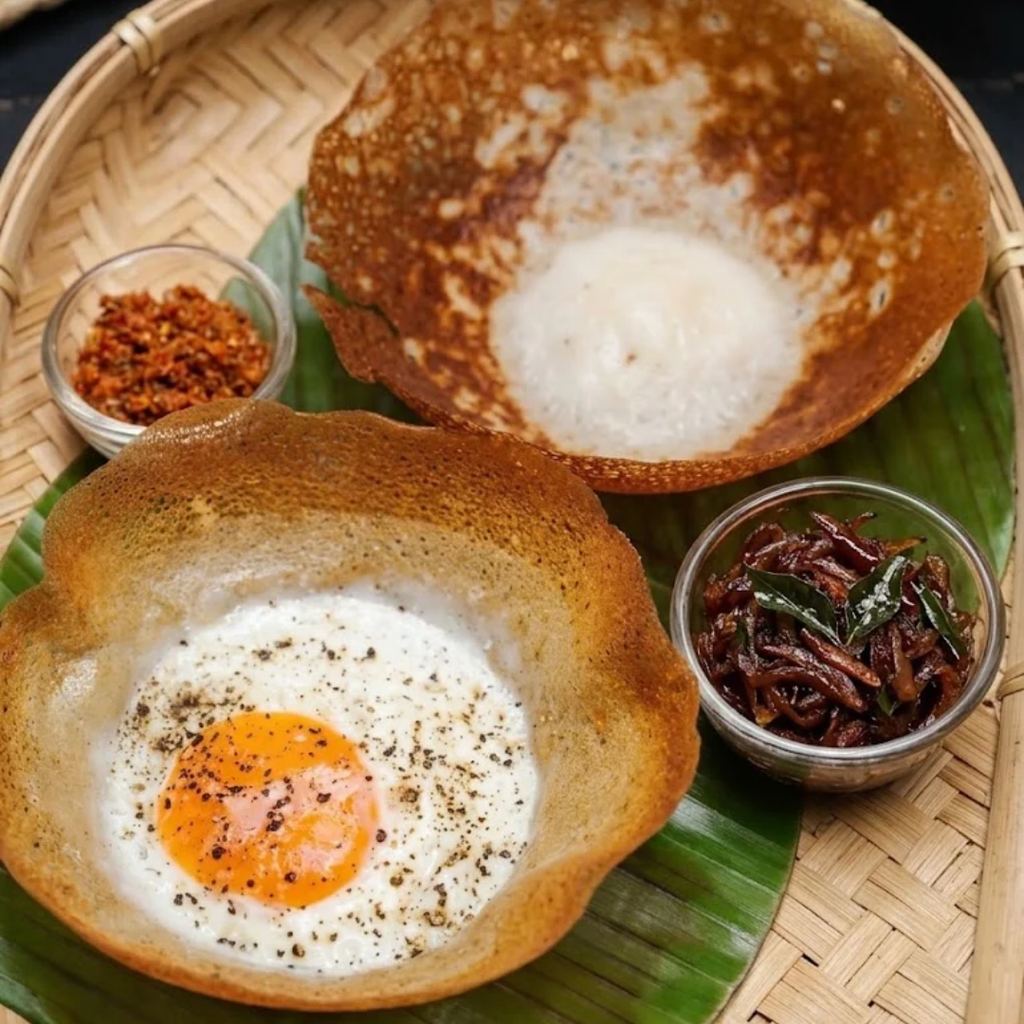
A bowl-shaped, fermented rice-and-coconut-milk pancake, crispy at the edges and soft in the center. Egg hoppers are the most popular version, with a fried egg cracked into the middle as it cooks.
- What it tastes like: Slightly tangy, buttery, with a satisfying crisp-to-soft texture
- When to eat it: Traditionally a breakfast or dinner dish, sold at small roadside “hoppers” stalls in the evening
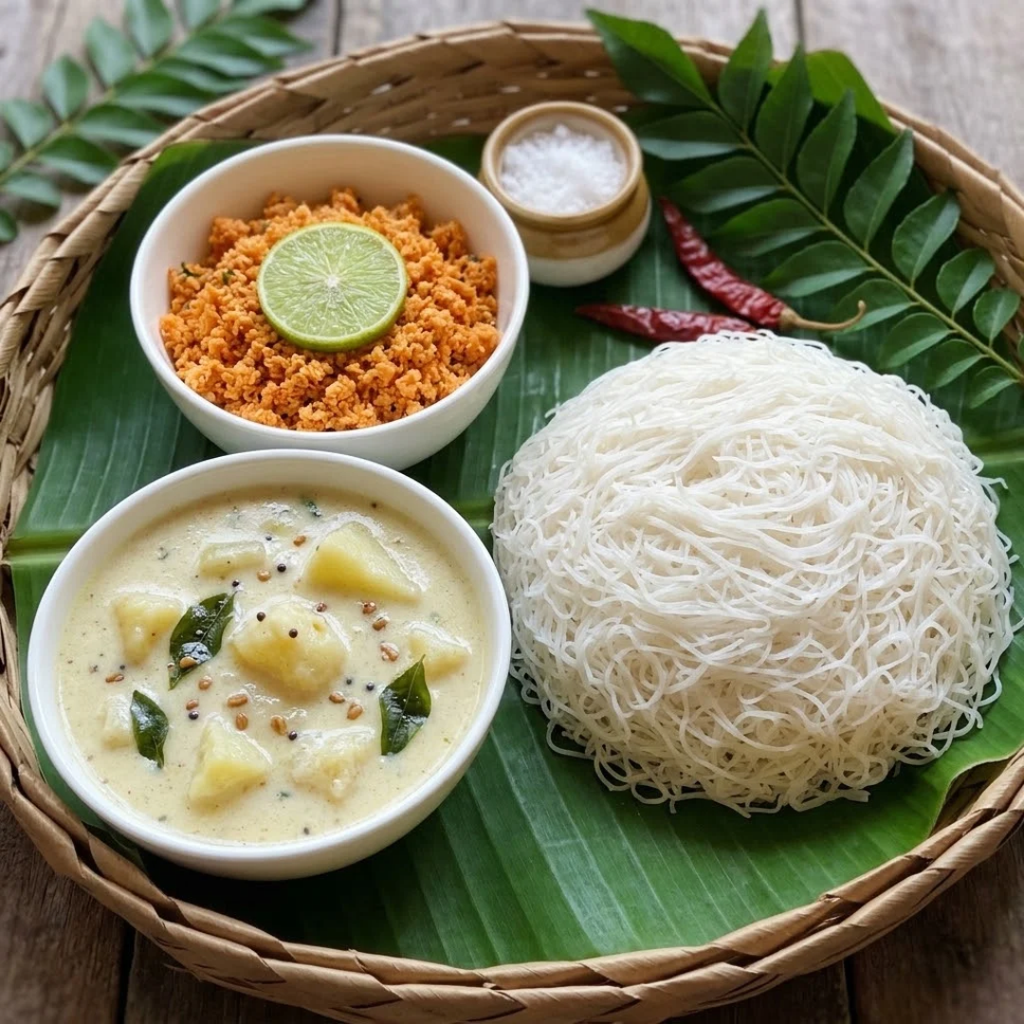
4. String Hoppers (Idiyappam)
Delicate, woven nests of steamed rice noodles, usually served with coconut sambol and a mild curry. Simple, but a staple in Sri Lankan homes and street stalls alike.
- What it tastes like: Soft and neutral on their own, designed to soak up bold curry flavors
- Best time to try: Breakfast, alongside dhal curry and sambol
5. Sri Lankan Sambols
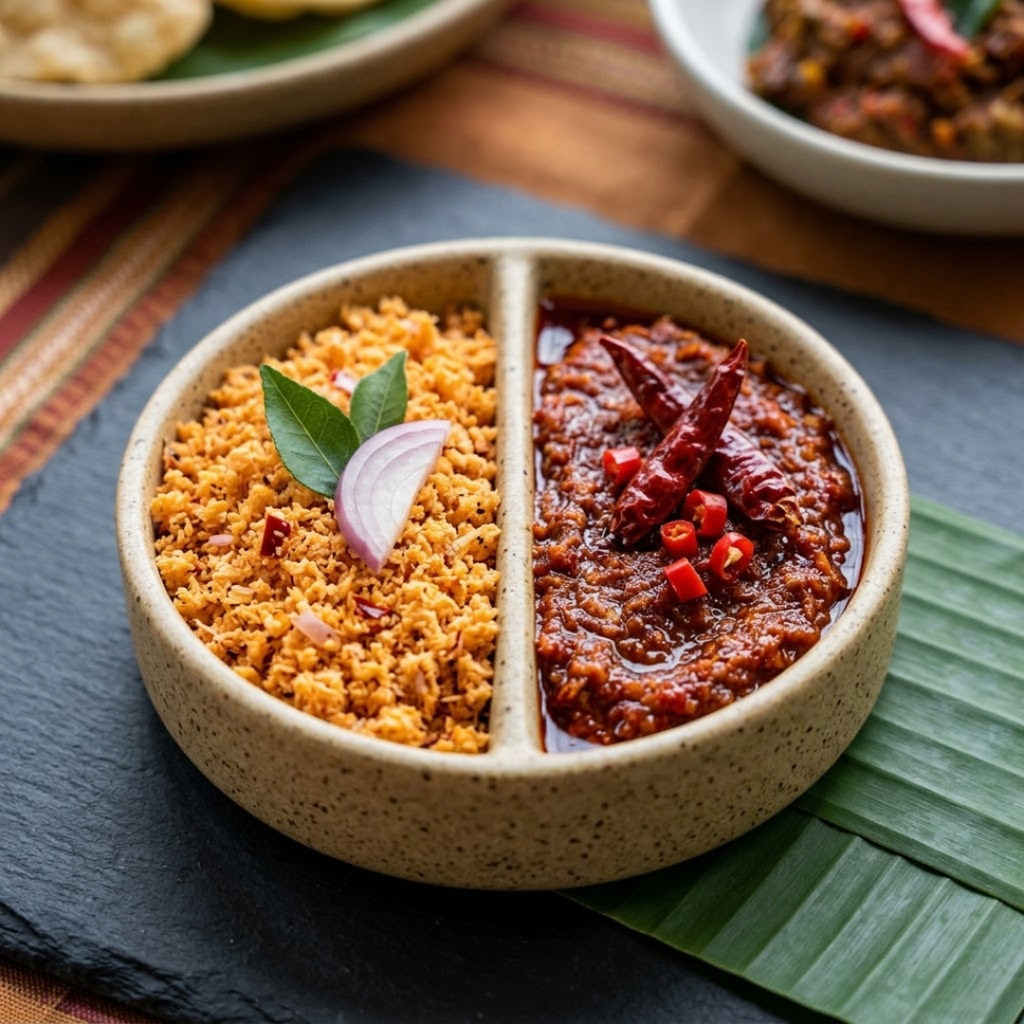
No street food list is complete without sambols, spicy, fresh condiments served alongside almost every meal.
- Pol sambol: Grated coconut mixed with chili, lime, and onion
- Katta sambol: A fiery blend of chili, onion, and Maldive fish
- These aren’t a side thought, they’re often what makes a simple meal unforgettable
6. Vade
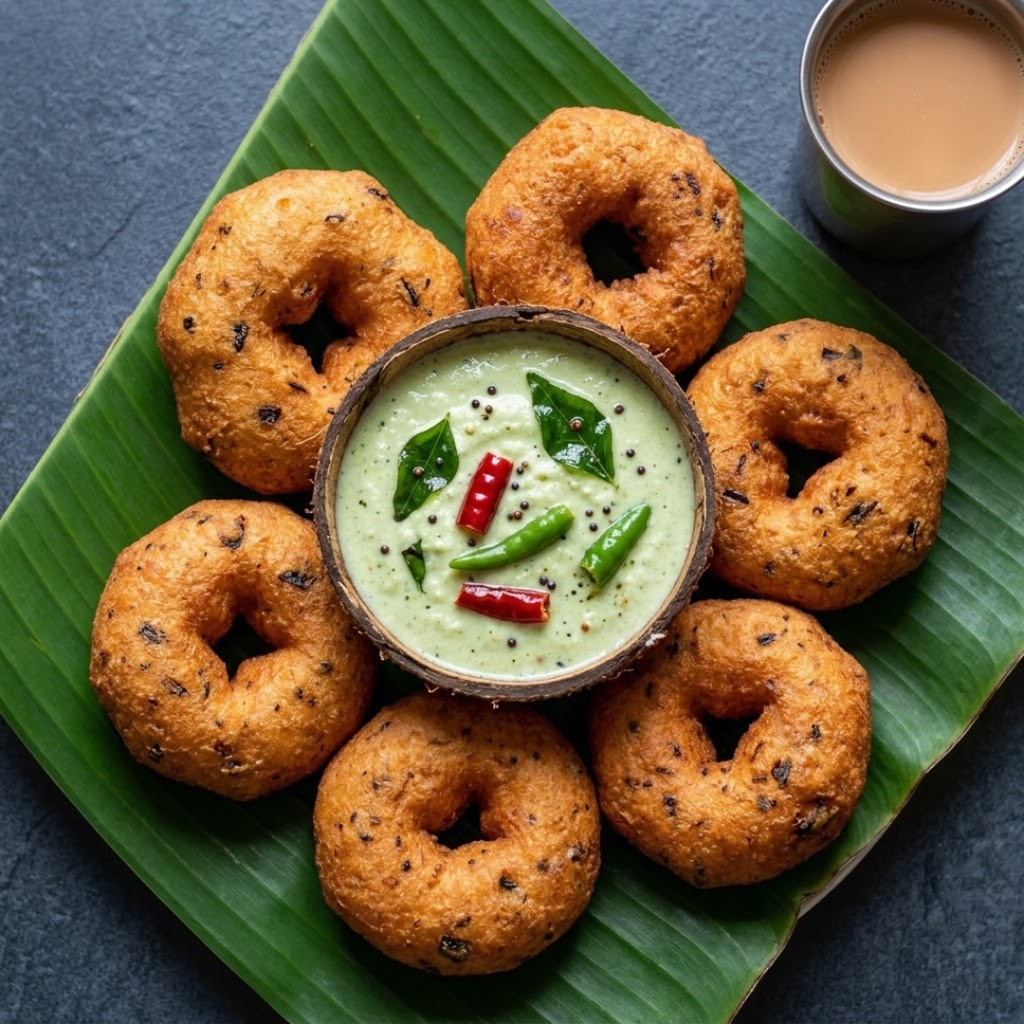
Deep-fried lentil doughnuts, crispy outside and soft inside, sold at almost every street corner and train station. Vendors often serve them with lunu miris (a spicy onion and chili relish) or a side of fried dry chillies and sliced onions, adding a sharp, fiery kick to every bite.
- What it tastes like: Crunchy and savory on its own, with a spicy, tangy punch when paired with lunu miris
- Best paired with: A cup of milk tea, making it a perfect grab-and-go snack any time of day
7. Achcharu (Sri Lankan Pickled Fruit)
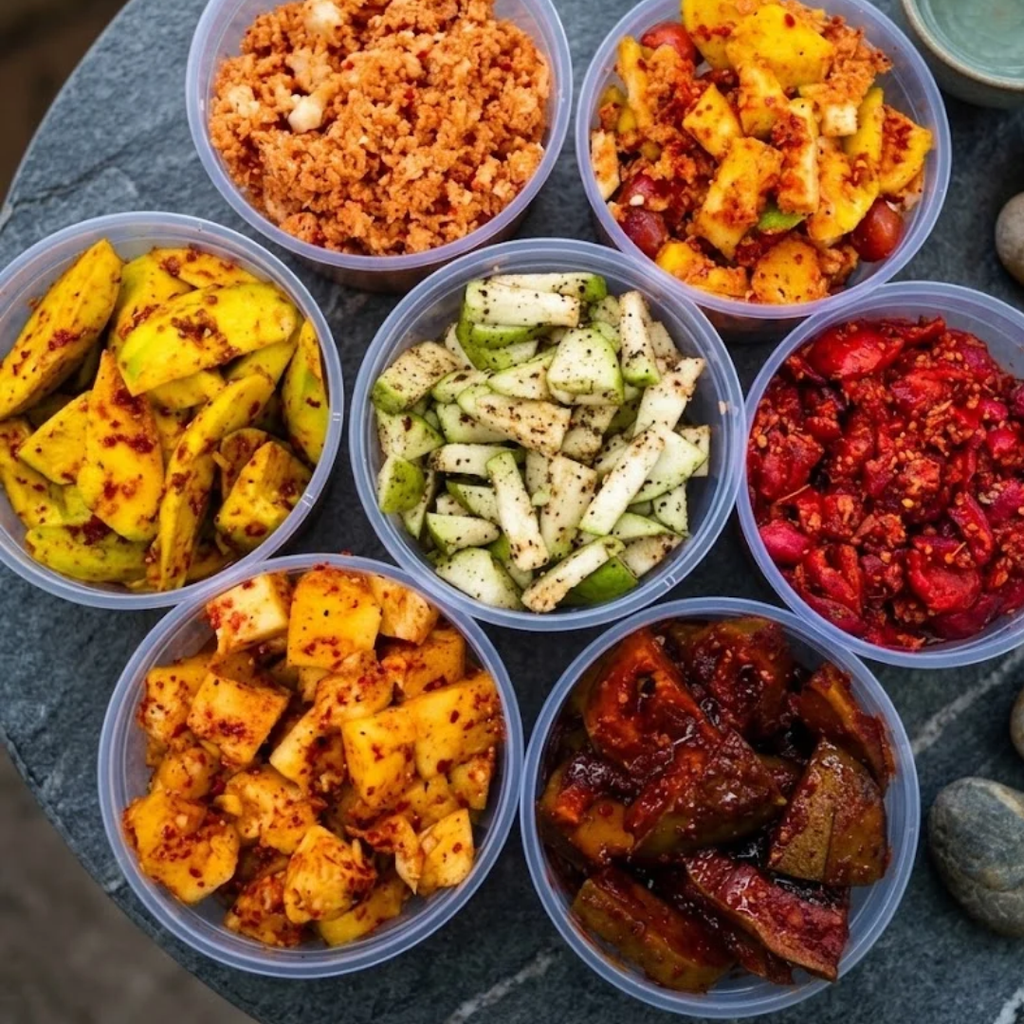
A sweet, sour, and spicy snack made from pickled fruits like mango, pineapple, and papaya, tossed in chili powder and salt. Popular with local kids after school and beachgoers alike, a true taste of nostalgia for many Sri Lankans.
- What it tastes like: A punchy mix of sweet, sour, salty, and spicy all at once
- Best paired with: Nothing else needed, it’s a stand-alone snack, best eaten straight from the bag
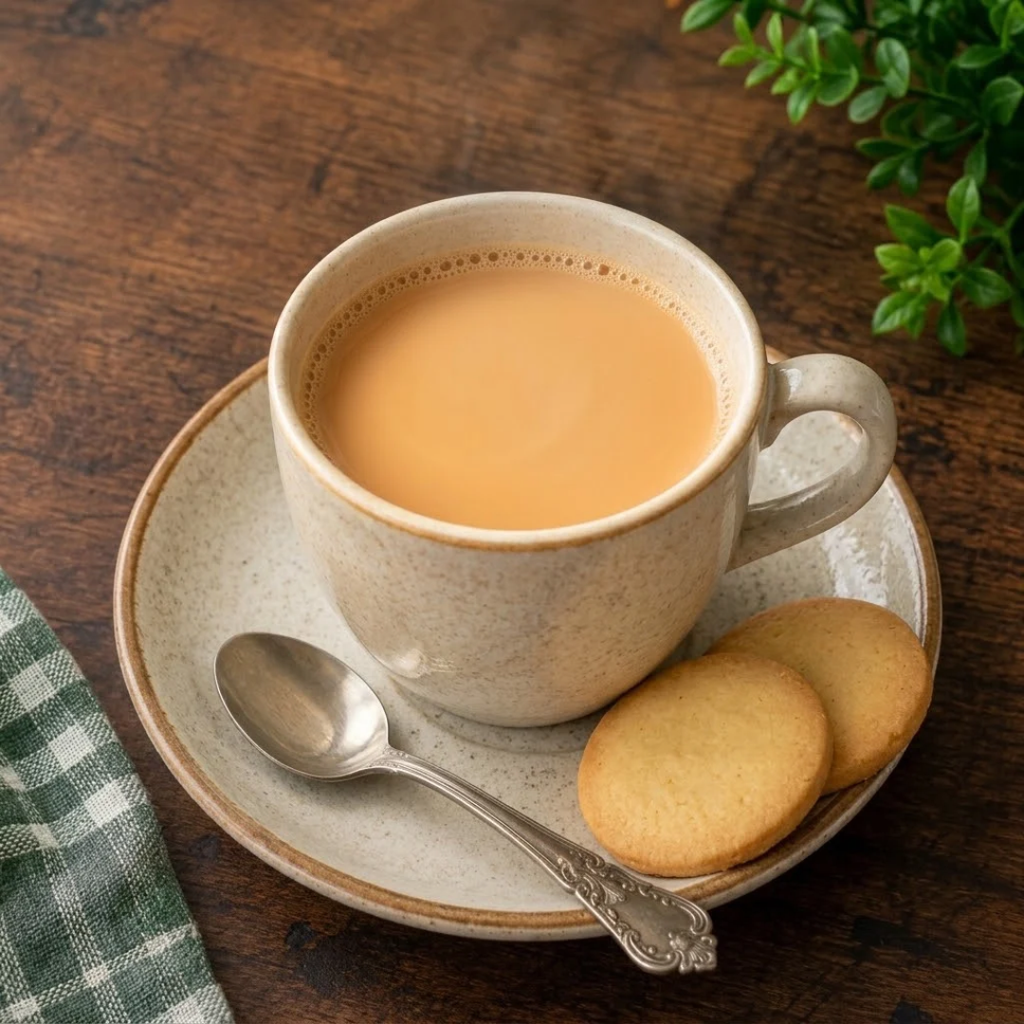
8. Milk Tea (Kiri Te)
Not food, but essential: Ceylon milk tea, brewed strong and sweet, sold from small roadside stalls throughout the day. Often the glue that holds a Sri Lankan street food crawl together.
- What it tastes like: Strong, sweet, and creamy, with a smooth finish from Ceylon tea leaves
- Best paired with: Vadai, short eats, or just a quiet moment between street food stops
Where to Find the Best Street Food
- Colombo: Pettah Market and Galle Face Green, especially in the evenings
- Galle: Street stalls just outside the Fort walls
- Mirissa & Coastal Towns: Beachside carts serving isso wade and fresh seafood
- Kandy: Small local eateries near the Temple of the Tooth
- Train Stations: Vendors selling vadai, achcharu, and snacks, a classic part of any Sri Lankan train journey
Street Food Tips for Travelers
- Go where the locals go, a busy stall is usually a good sign
- Start mild if you’re spice-sensitive, then work your way up to sambols and katta sambol
- Carry small cash, since most street vendors don’t accept cards
- Try it fresh and hot, much of Sri Lankan street food is best eaten right off the griddle
- Don’t skip breakfast stalls, hoppers and string hoppers are often best in the morning
Frequently Asked Questions
Final Thoughts
Sri Lankan street food isn’t something you just eat, it’s something you experience, standing at a stall as the chef works fast, hands moving like they’ve done this a thousand times before. From the smoky clang of kottu roti to the crisp bite of an isso wade by the sea, every dish tells you something about the island and the people who make it.
So skip the hotel buffet, follow the smell of spices down the nearest street, and let Sri Lanka’s street food do what it does best, surprise you, one bite at a time.