
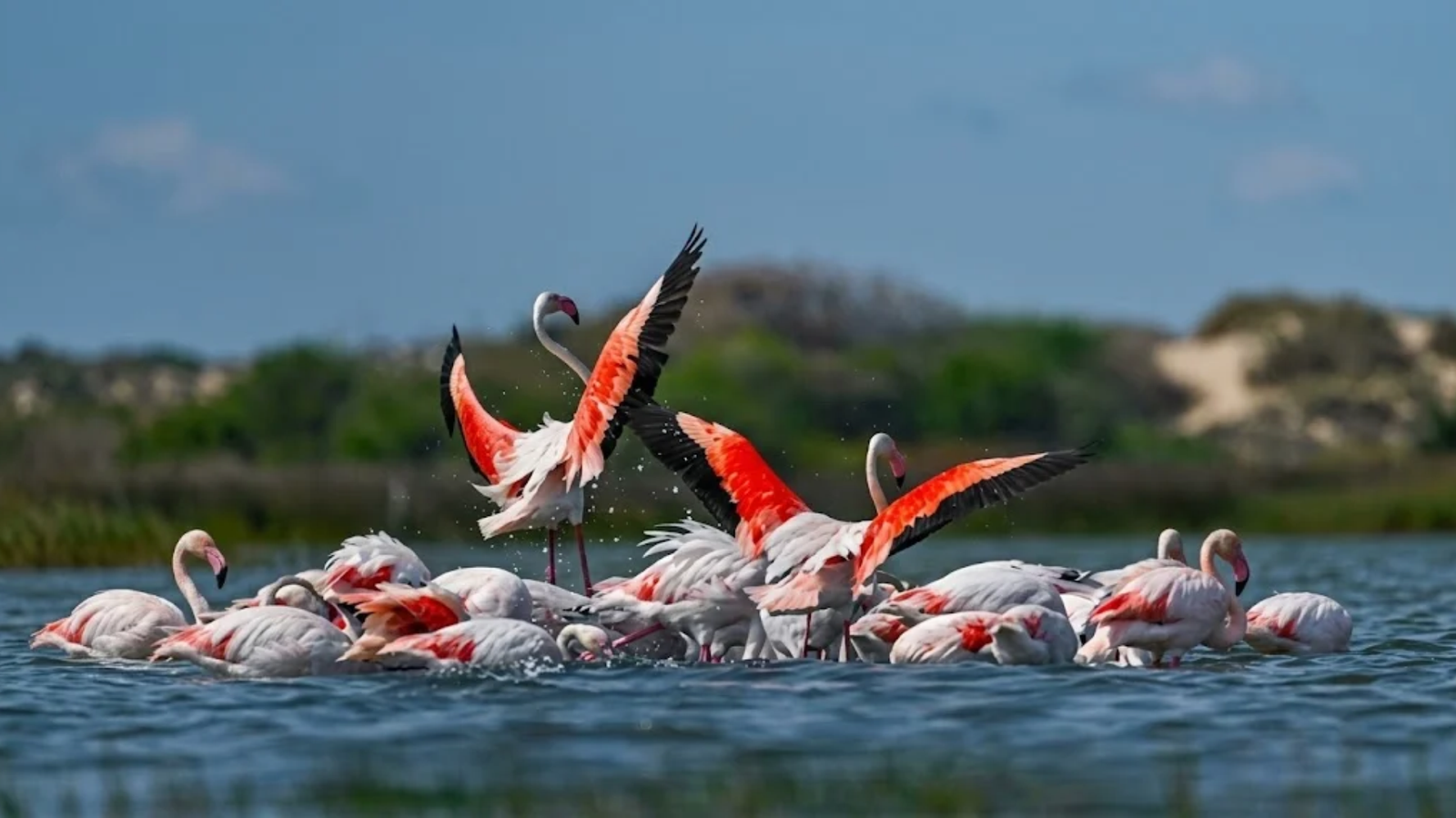
Most visitors come to Sri Lanka chasing leopards and elephants, and overlook one of the island’s quietest, most ecologically significant parks entirely. Bundala National Park, tucked along the southern coast near Hambantota, isn’t about roaring predators, it’s about flamingos wading through pink-tinted lagoons, thousands of migratory birds arriving from as far as Siberia, and a landscape that earned Sri Lanka its first-ever international wetland recognition.
This guide covers what makes Bundala special, what you’ll actually see there, and how to plan a visit,especially if birdwatching or quieter wildlife experiences are what you’re after.
What Makes Bundala National Park Important
Bundala holds a unique place in Sri Lanka’s conservation history:
- Established as a sanctuary in 1969, later redesignated as a national park in 1993
- Sri Lanka’s first Ramsar Wetland, declared in 1991, a designation given to wetlands of international importance
- A UNESCO Biosphere Reserve since 2005, the fourth to be designated in Sri Lanka
- Located roughly 245 km southeast of Colombo, near Hambantota in the Southern Province
These aren’t just titles, they reflect Bundala’s role as one of the most important wintering grounds for migratory water birds anywhere in South Asia.
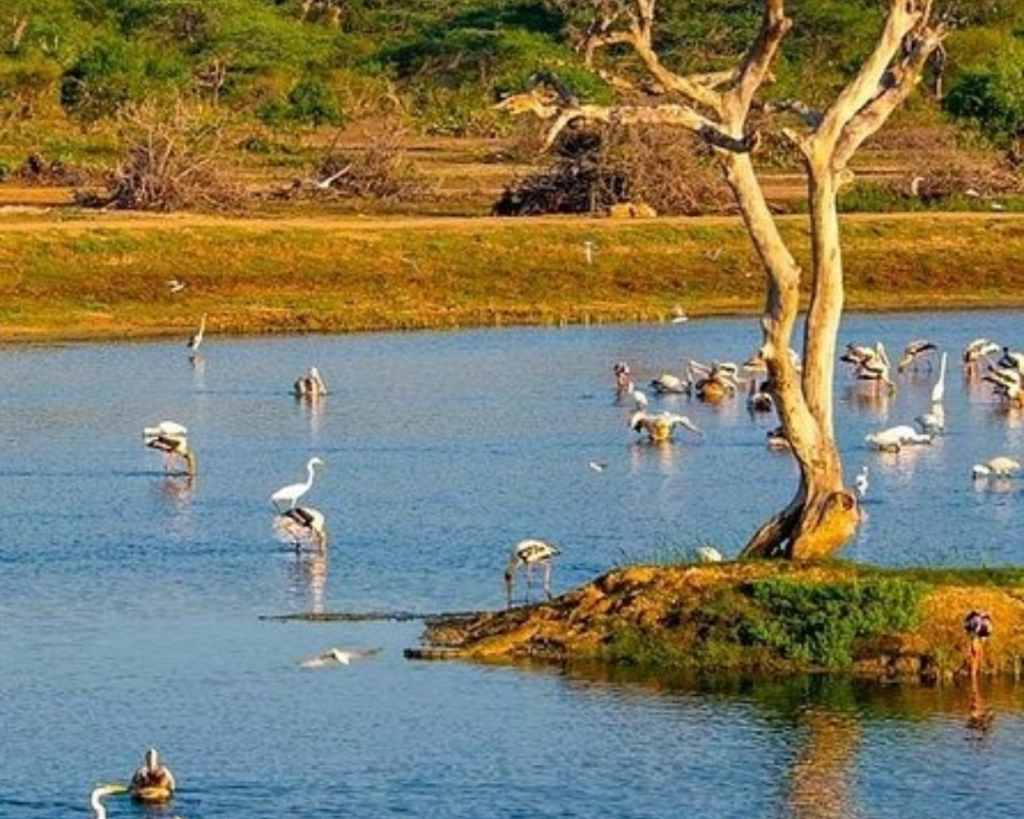
The Landscape: Where Land Meets Sea
Bundala’s terrain is unlike the dense jungle most people picture for a Sri Lankan safari. Instead, it’s a mix of:
- Shallow coastal lagoons connected by winding channels
- Sand dunes and open beaches where sea turtles nest
- Thorny scrub jungle and dry monsoon forest
- Patches of mangrove forest
This open, varied landscape is exactly what makes Bundala such a magnet for birdlife, the lagoons stay rich with the small fish and invertebrates that wading birds depend on, even during the driest months.
The Birds: Bundala’s Main Attraction
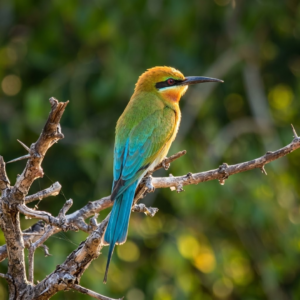
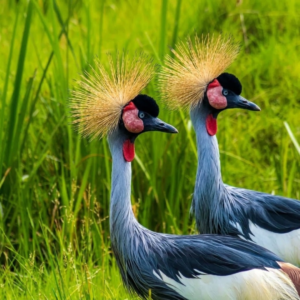
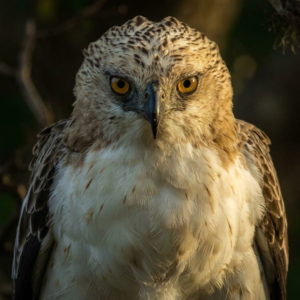
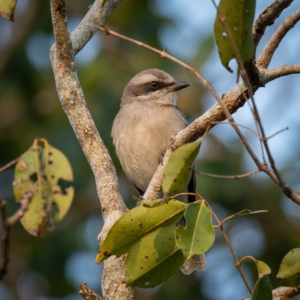
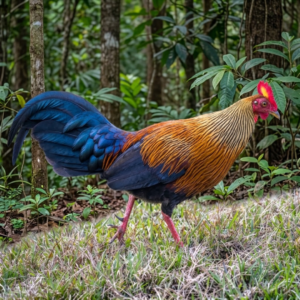
If you only visit one park in Sri Lanka for birdwatching, Bundala is a serious contender. The numbers speak for themselves:
- Around 197 bird species recorded at Bundala, with roughly 58 migratory species
- Out of Sri Lanka’s 33 endemic bird species, six can be seen here, including the Sri Lanka Jungle Fowl (the national bird) and the Sri Lanka Woodshrike
- Migratory birds arrive from as far as Siberia and Eastern Europe, typically between September and March
- Bundala is considered the only park in Sri Lanka where nearly every waterbird species recorded in the country can potentially be seen
The Star of the Show: Greater Flamingos
Bundala’s most iconic resident isn’t a resident at all it’s a seasonal visitor. Greater flamingos, migrating in from neighboring India, arrive in flocks and wade through the shallow lagoons, often considered the park’s single most photographed sight.
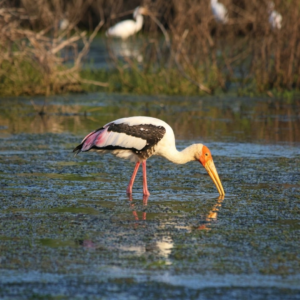
Other notable species include painted storks, spoonbills, pelicans, black-winged stilts, and a long list of sandpipers, plovers, and terns that pass through during migration season.
Beyond Birds: Other Wildlife in Bundala
While birds are the headline, Bundala supports a surprisingly diverse range of other wildlife:
- Mammals: Elephants, wild buffalo, spotted deer, jackals, mongoose, and civets, along with troops of grey langur and toque macaque
- Reptiles: Crocodiles in the lagoons, along with monitor lizards
- Sea turtles: Several species nest along Bundala’s beaches
- In total, researchers have recorded over 320 species of vertebrates across the park, including fish, amphibians, reptiles, birds, and mammals
It’s a reminder that Bundala isn’t a one-note destination, the birdlife is the main draw, but the park supports a genuinely rich, layered ecosystem.
Best Time to Visit Bundala
- Peak birdwatching season: September to March, when migratory birds are present in the greatest numbers
- December is often considered the single best month for birding, with the widest variety of species present
- Bundala can technically be visited year-round, but the wetland habitats are at their most active and bird-rich during the migratory season
Quick Tip: If flamingos are your main reason for visiting, aim for the peak migratory months, sightings become far less reliable outside this window.
How to Visit Bundala National Park
Getting There
Bundala is most easily reached from the south coast, making it a natural addition to a trip that already includes Yala, Mirissa, or Galle. It’s roughly a 45-minute drive from resorts in the Hambantota area.
Safari Experience
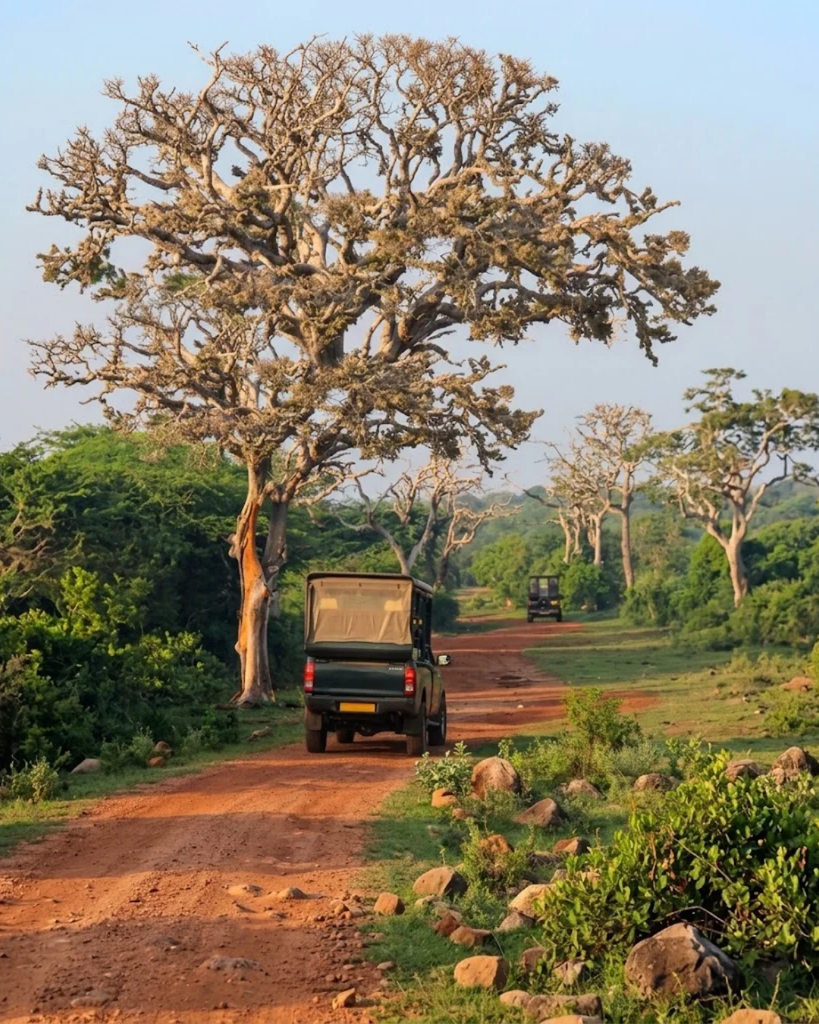
Like Sri Lanka’s other national parks, Bundala is explored by jeep safari, typically in morning or afternoon sessions. Because the terrain is more open than forested parks like Yala, visibility is often excellent — both for birdlife and for spotting elephants or deer moving across the grassland.
What to Bring
- Binoculars, essential for birdwatching, more so here than almost anywhere else in Sri Lanka
- A zoom lens if you’re serious about bird photography
- Sun protection, the open lagoon landscape offers very little shade
- Neutral-colored clothing to avoid startling birds and other wildlife
Why Bundala Deserves More Attention
Bundala often gets overshadowed by Yala, its more famous neighbor known for leopards. But for travelers genuinely interested in birdlife, wetland ecosystems, or simply a quieter, less crowded safari experience, Bundala offers something Yala can’t: a landscape built almost entirely around the rhythm of migration, tides, and water.
It’s less about dramatic predator sightings and more about patience — watching a flock of flamingos lift off together, or spotting a rare migratory wader that flew thousands of kilometers just to rest in this particular lagoon.
Frequently Asked Questions
Final Thoughts
Bundala National Park won’t give you the adrenaline of a leopard sighting, but it offers something rarer: a front-row seat to one of South Asia’s most important bird migrations, set against a landscape of lagoons, dunes, and scrubland found almost nowhere else in Sri Lanka. For birdwatchers and quiet-nature seekers alike, it’s one of the island’s most underrated wildlife destinations.