
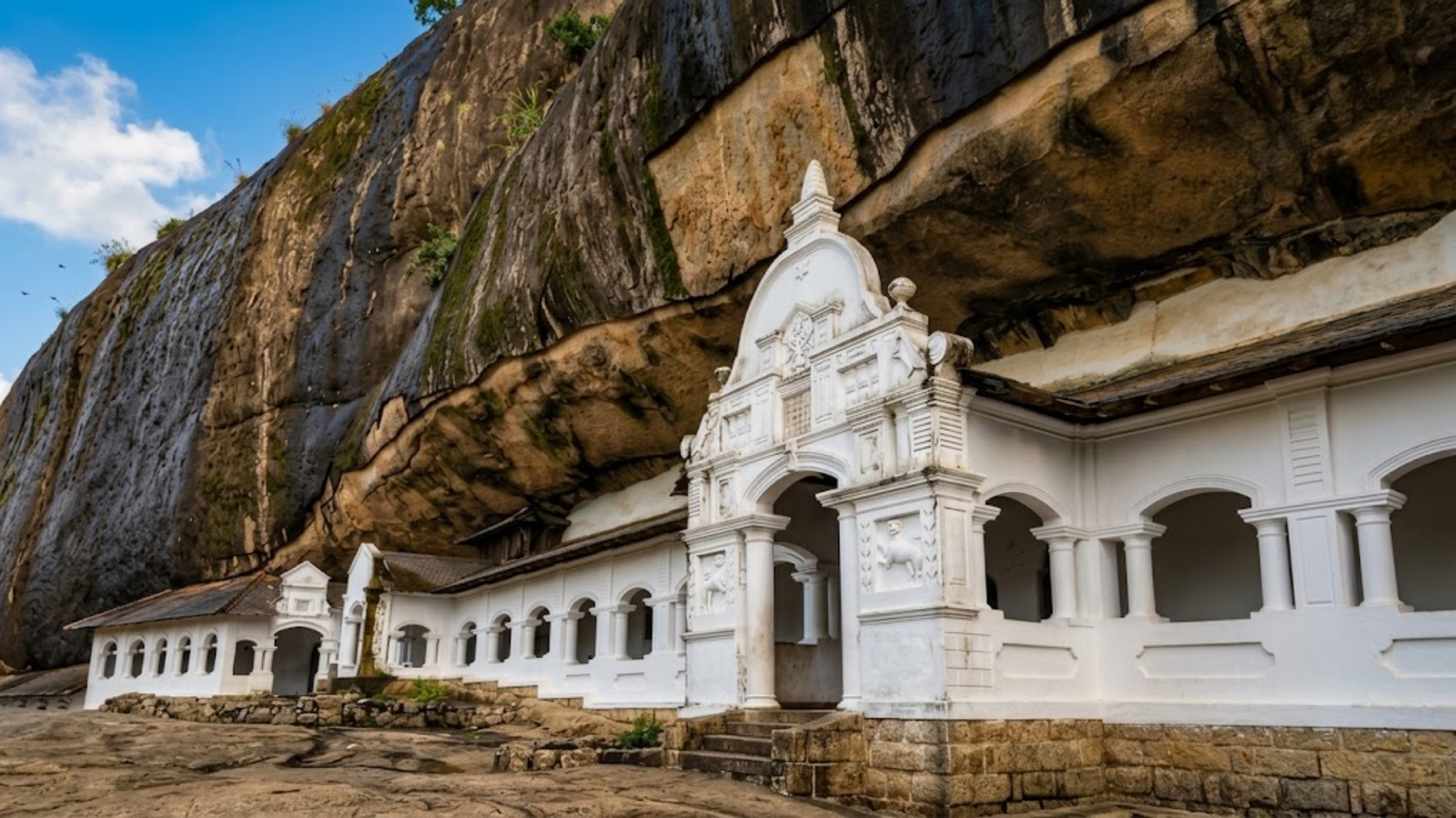
There’s a moment, right as you step out of the sun and into the cool darkness of the first cave, when the outside world simply disappears. The heat, the noise, the crowds waiting at the entrance, all of it fades behind you. What’s left is silence, the smell of old stone and incense, and hundreds of golden Buddha statues watching from the shadows, some of them older than most countries on Earth.
This is the Dambulla Cave Temple, Sri Lanka’s largest and best-preserved cave temple complex, and a place that has quietly held the island’s faith, art, and history inside its rock for over 2,000 years.
A Temple Born From a King’s Gratitude
The story of Dambulla doesn’t begin with worship, it begins with survival.
In the 1st century BC, King Valagamba (also known as Vattagamani Abhaya) was driven from his throne in Anuradhapura, forced to flee into the wilderness after invasion. For 14 years, he lived as a fugitive, hiding in the very caves that would later become Dambulla, sheltered by monks who risked everything to protect him.
When the king finally reclaimed his throne, he didn’t forget who had given him refuge when he had nothing. In gratitude, he transformed the caves that once hid him into a magnificent temple, carving shrines into the rock itself, as a permanent thank-you carved not in words, but in stone and gold.
That’s the quiet, powerful truth about Dambulla: it exists because of loyalty, faith, and a promise kept.
Stepping Inside: What You’ll Actually See
Dambulla isn’t one cave, it’s five caves, connected along the base of a massive 160-meter-high rock, each one telling a different chapter of the story.
Cave 1: The Cave of the Divine King
A quiet, humbling introduction home to a striking 14-meter reclining Buddha, carved directly out of the rock itself.
Cave 2: The Cave of the Great Kings
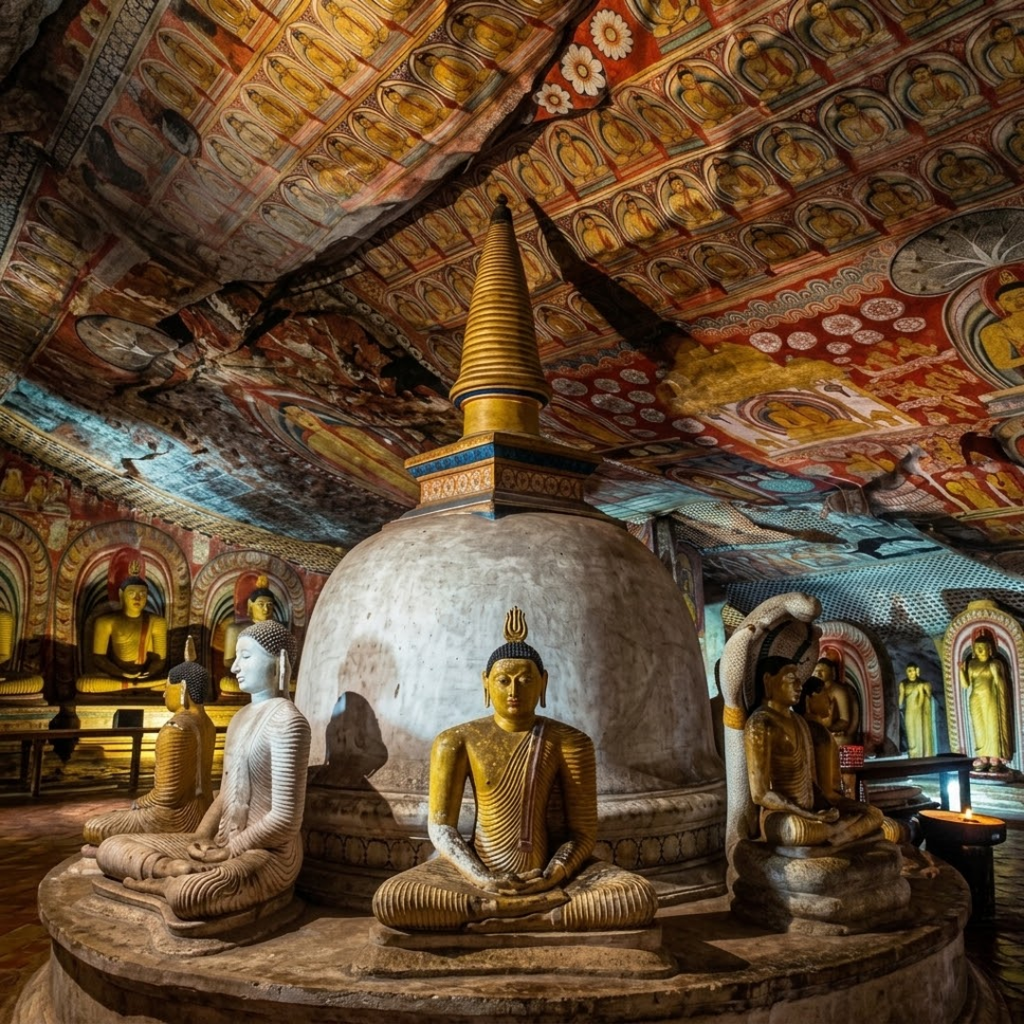
The largest and most breathtaking of them all. Over 150 Buddha statues fill this cave, alongside statues of King Valagamba himself and King Nissanka Malla, another ruler who later expanded the temple. Look up, and you’ll see the ceiling, painted edge to edge in intricate patterns of lotus flowers, deities, and scenes from Buddhist teachings, a canvas over a thousand years in the making.
Cave 3: The Great New Monastery
Added later, during the Kandyan era, this cave holds more statues and paintings, showing how each generation added its own devotion to the site rather than replacing what came before.
Caves 4 & 5: Smaller, but no less sacred
Quieter spaces with smaller shrines, offering a more intimate, personal moment away from the busier main caves.
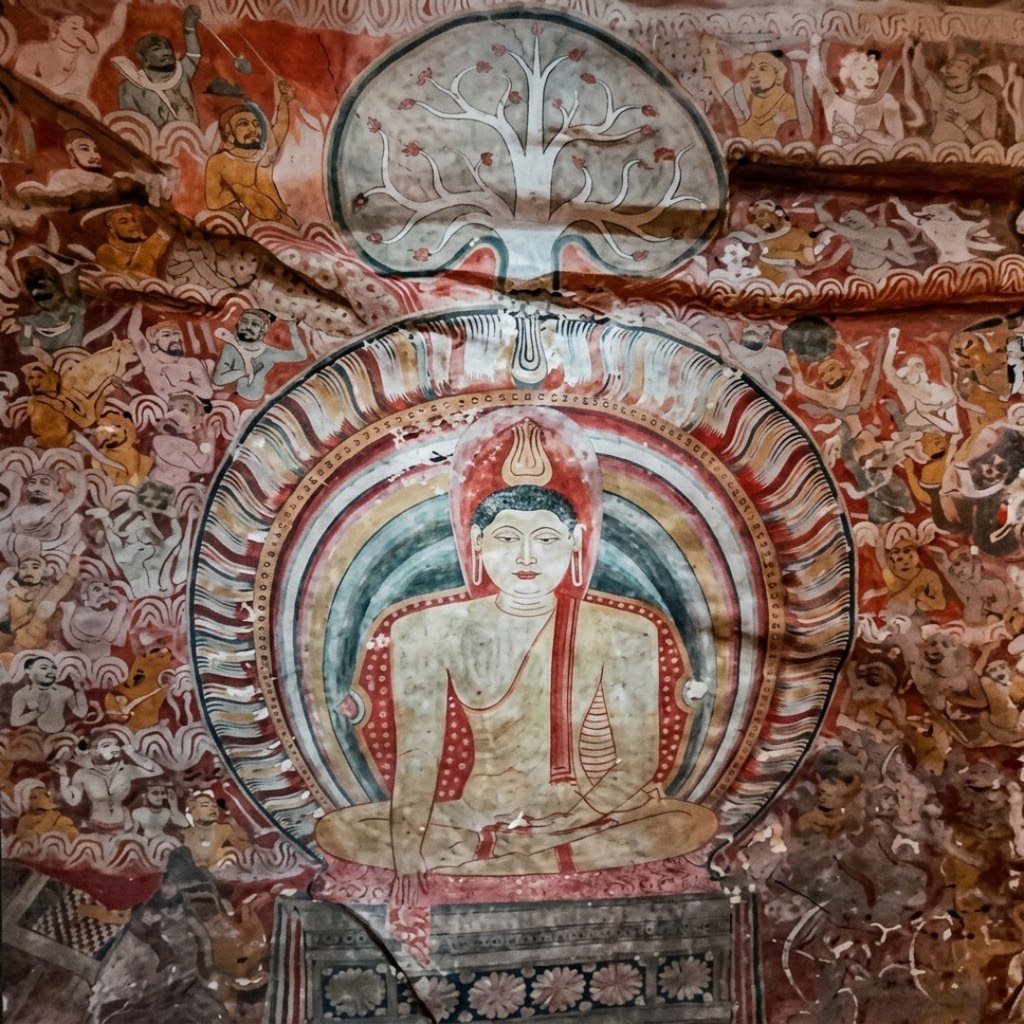
In total, Dambulla holds more than 150 Buddha statues and roughly 2,100 square meters of murals making it the largest and most complete cave temple complex in Sri Lanka.
Why Dambulla Still Matters Today
It would be easy to walk through Dambulla as just another historical stop on a checklist. But this place has survived invasions, colonization, and centuries of change and it’s still an active place of worship today, not a museum piece behind glass.
Monks still walk these same paths. Locals still come to pray, to light oil lamps, to sit in silence in front of statues carved by people whose names history never recorded. When you visit, you’re not just observing history you’re stepping into a living tradition that never stopped.
This is why UNESCO recognized Dambulla as a World Heritage Site in 1991 not just for its age, but because it represents an unbroken chain of faith and artistry stretching back over two millennia.
The View That Makes It Worth the Climb
Getting to the caves means climbing a series of steps up the rock face, not as steep as Sigiriya, but enough to leave you a little breathless, in more ways than one.
Along the way, don’t be surprised if a few wild toque macaque monkeys watch you climb, completely unbothered, as if they’ve seen a thousand travelers make this same walk before you (because they have).
When you reach the top and turn around, the reward is immediate: an uninterrupted view across Sri Lanka’s central plains, with Sigiriya Rock often visible in the distance, a quiet reminder that you’re standing in the heart of the island’s ancient Cultural Triangle.
Practical Details for Your Visit
- Best time to visit: Early morning or late afternoon, avoiding the midday heat
- What to wear: Modest clothing covering shoulders and knees, this is a working temple, not a tourist attraction
- Remove your shoes: Required before entering the caves, so consider socks if the stone gets hot
- Time needed: 1–2 hours, including the climb and time inside the caves
- Nearby pairing: Easily combined with Sigiriya Rock, just a short drive away
Frequently Asked Questions
Final Thoughts
Some places you visit for the view. Others, you visit for the history. Dambulla gives you both, but what it really offers is something rarer: a moment of stillness inside a story that’s been unfolding for over two thousand years, protected by monks, kings, and generations of quiet devotion.
Stand inside that first cave, surrounded by golden statues watching from every wall, and you’ll understand why people don’t just visit Dambulla once. They come back because some places don’t just show you history. They let you feel it.