
There is a moment, usually somewhere between watching the sun rise over Sigiriya’s ancient rock fortress and eating your first proper rice and curry on a banana leaf, when Sri Lanka stops being a destination and becomes an obsession. This island has a way of doing that.
This is the most complete Sri Lanka travel guide online. Whether you are planning your first visit or your fifth, you will find everything here: when to go, where to stay, how to get around, what to eat, and how to spend two weeks on the island without wasting a single day.
| ✈️ Quick Facts Capital: Sri Jayawardenepura Kotte (Colombo is the commercial capital) Currency: Sri Lankan Rupee (LKR) Language: Sinhala & Tamil Visa: ETA required for most nationalities, obtainable online Time zone: UTC+5:30 Best time to visit: December–March (west & south), May–September (east coast) |
Why Visit Sri Lanka in 2026?
Sri Lanka packs more into a single island than most countries manage across an entire continent. In the space of two weeks, you can ride a colonial-era train through mist-wrapped tea estates, spot leopards on safari, snorkel above coral reefs, explore 2,000-year-old ruins, and eat some of the best food in South Asia, all without ever needing to catch a flight.
Tourism has rebounded strongly after the difficult years of 2019 to 2022. Infrastructure has improved, new boutique hotels have opened, and the country feels energised and ready to welcome visitors. Prices, while no longer rock-bottom, remain significantly lower than comparable destinations in Southeast Asia.
- Extraordinary variety, jungle, beach, mountains and ancient cities within hours of each other
- Incredible food, one of the world’s great undiscovered culinary traditions
- Warm, genuine hospitality, repeatedly voted one of Asia’s friendliest destinations
- Affordable luxury, world-class hotels and experiences at a fraction of the price
- Compact and easy to navigate, you can cross the country in under six hours
- Wildlife, leopards, elephants, blue whales and sloth bears all in the wild
Why Visit Sri Lanka in 2026?
Sri Lanka packs more into a single island than most countries manage across an entire continent. In the space of two weeks, you can ride a colonial-era train through mist-wrapped tea estates, spot leopards on safari, snorkel above coral reefs, explore 2,000-year-old ruins, and eat some of the best food in South Asia, all without ever needing to catch a flight.
Tourism has rebounded strongly after the difficult years of 2019 to 2022. Infrastructure has improved, new boutique hotels have opened, and the country feels energised and ready to welcome visitors. Prices, while no longer rock-bottom, remain significantly lower than comparable destinations in Southeast Asia.
- Extraordinary variety, jungle, beach, mountains and ancient cities within hours of each other
- Incredible food, one of the world’s great undiscovered culinary traditions
- Warm, genuine hospitality, repeatedly voted one of Asia’s friendliest destinations
- Affordable luxury, world-class hotels and experiences at a fraction of the price
- Compact and easy to navigate, you can cross the country in under six hours
- Wildlife, leopards, elephants, blue whales and sloth bears all in the wild
Best Time to Visit Sri Lanka
Sri Lanka has two monsoon seasons driven by its position in the Indian Ocean, which means the best time to visit depends heavily on where you plan to go. Understanding this is the single most important thing you can do when planning your trip.
December to March, West & South Coast (Peak Season)
This is the most popular time to visit. The west and south coasts, including Colombo, Galle, Mirissa and Unawatuna, are dry, sunny and ideal for beach holidays. The Cultural Triangle (Sigiriya, Dambulla, Polonnaruwa) and the Hill Country (Ella, Nuwara Eliya) are also excellent during these months. Expect higher prices and more crowds, especially over Christmas and New Year.
May to September, East Coast Season
When the southwest monsoon brings rain to the west coast, the east coast comes into its own. Trincomalee, Arugam Bay and Batticaloa see their best weather from May to September. This is also prime season for surfing at Arugam Bay and whale watching off the east coast.
April & October/November, Shoulder Season
April (around the Sinhala and Tamil New Year) and October to November are transitional months. Prices drop, crowds thin out, and both coasts can be unpredictable. Experienced travellers often enjoy this period precisely because of the quieter atmosphere.
| 💡 Pro Tip If you can only visit once, aim for January or February. The west coast, Cultural Triangle and Hill Country are all at their best simultaneously, and the weather is reliably excellent island-wide. |
How to Get to Sri Lanka
The main entry point is Bandaranaike International Airport (CMB) in Katunayake, approximately 30km north of Colombo.
Direct Flights
SriLankan Airlines operates direct flights from London Heathrow, Paris, Frankfurt, Dubai, Singapore, Bangkok and several Indian cities. Emirates, Qatar Airways, Etihad and Air India all serve Colombo with one stop. Flying time from the UK is approximately 10 to 11 hours direct, or 13 to 15 hours with a connection.
Airport to Colombo
The Colombo–Katunayake Expressway has made the airport transfer fast and straightforward. Options include:
- Airport Express Train from Katunayake Station: the cheapest option at LKR 100, though the station is a 10-minute walk from the terminal
- Metered taxi via PickMe or Uber app: approximately LKR 2,500–3,500 (£7–10), always use the app to avoid overcharging
- Airport express taxi (official counters in arrivals): LKR 3,500–5,000 but safe and reliable
Top Destinations in Sri Lanka
Here is a quick overview of the island’s essential stops. Each destination has its own dedicated guide on Tropical Days, click through for in-depth advice on what to do, where to eat and where to stay.
Sigiriya
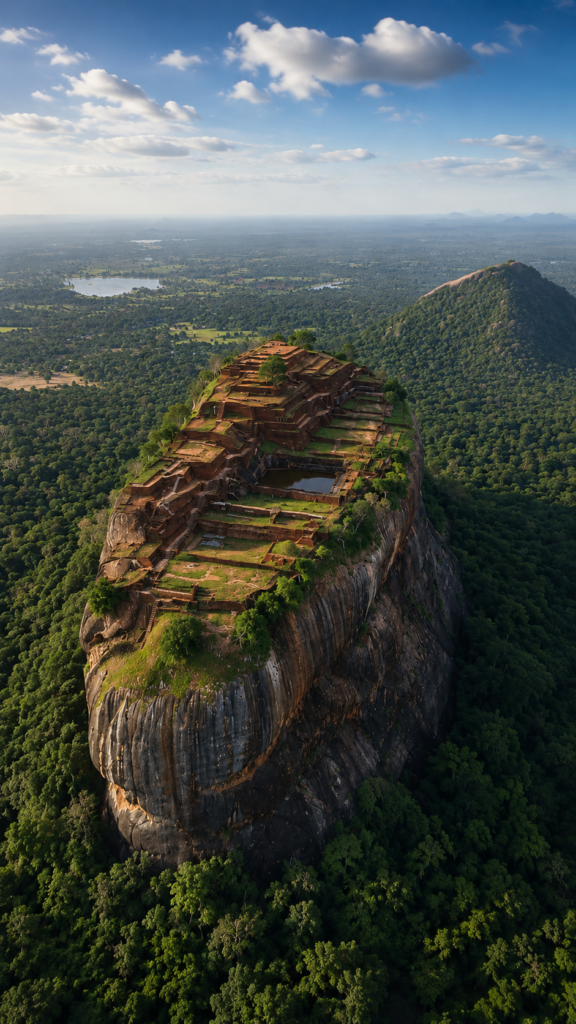
A UNESCO World Heritage Site and arguably the most dramatic sight in Sri Lanka. Sigiriya is a 200-metre volcanic rock fortress built in the 5th century by King Kashyapa, topped with the ruins of a royal palace. Climb it at sunrise if you can, by 9am the path is crowded and the heat is intense. See our full Sigiriya travel guide for everything you need to know.
Ella
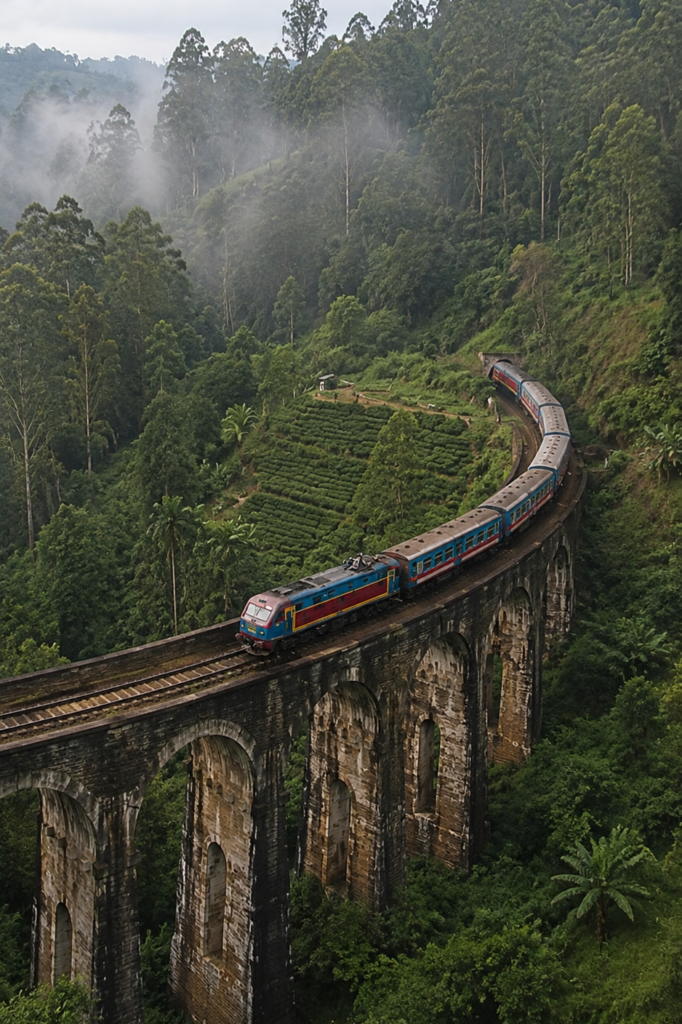
A small hill town at an elevation of 1,000 metres, surrounded by tea estates and dramatic ridges. The Nine Arch Bridge is one of Sri Lanka’s most photographed sights, worth the 20-minute walk from town, especially when a train crosses. Hike Little Adam’s Peak for views without the crowds of the real Adam’s Peak.
Galle Fort
A perfectly preserved Dutch colonial fortified city on the southwestern tip of the island, built in the 17th century and now a UNESCO World Heritage Site. Wander the ramparts at sunset, browse boutique shops, and eat exceptionally well, Galle has the best restaurant scene outside Colombo. Read our complete Galle Fort guide for itinerary ideas.
Trincomalee
Sri Lanka’s best-kept secret. Trincomalee’s Nilaveli and Uppuveli beaches are quieter and less commercial than the south coast, the diving is excellent, and the combination of Hindu temples, colonial forts and pristine bays is unlike anywhere else in the country. Visit between May and September.
Kandy
The cultural capital of Sri Lanka, home to the Temple of the Tooth Relic, one of the most sacred sites in the Buddhist world. The Kandy Esala Perahera festival in July/August is one of Asia’s great spectacles. The surrounding area produces some of Sri Lanka’s finest Ceylon tea.
Arugam Bay
Sri Lanka’s surf capital and a haven for slow travellers. The main break at Arugam Bay is one of the top ten surf spots in the world. Even if you don’t surf, the town’s relaxed atmosphere, excellent seafood restaurants and nearby elephant sanctuary make it worth the journey from the west coast.
Best Hotels and Where to Stay in Sri Lanka
Sri Lanka has an extraordinary range of accommodation, from family-run guesthouses charging £15 a night to some of the most acclaimed luxury resorts in Asia. Here are the stand-out options at each level. For full reviews and booking links, see our Sri Lanka Hotels Guide.
Luxury (£200–500+/night)
- Amangalla, Galle, the benchmark for colonial luxury; inside the Fort walls
- Cape Weligama, cliff-top infinity pool and extraordinary ocean views
- Amanwella, Tangalle, secluded beach resort, arguably Aman’s best in Asia
- Heritance Kandalama, Dambulla, Geoffrey Bawa masterpiece carved into a jungle cliff
Mid-Range (£60–150/night)
- 98 Acres Resort, Ella, tea estate bungalows with Nine Arch Bridge views
- The Fort Bazaar, Galle, boutique heritage hotel inside the Fort
- Cinnamon Lodge, Habarana, well-run, great for Cultural Triangle exploration
Budget (Under £40/night)
- Colombo’s serviced apartments, more space and better value than hotels for city stays
- Ella’s guesthouses, dozens of excellent family-run options from £15–35
- Mirissa’s beach bungalows, simple, charming, excellent for beach stays
| 💡 Booking Advice Book luxury hotels at least 2–3 months ahead for December–March travel. Mid-range and budget options can generally be booked 2–4 weeks ahead except over Christmas and New Year, when everything fills up island-wide. |
Getting Around Sri Lanka
Getting around Sri Lanka is half the adventure. Here are your main options:
Train
The Sri Lankan railway network is slow, occasionally delayed, and genuinely one of the most beautiful ways to travel in the world. The Kandy–Ella route through the hill country is unmissable. Book observation car tickets on the Sri Lanka Railways website at least two weeks ahead for the popular Kandy–Ella leg.
Tuk-Tuk
The default short-distance transport. Always agree a price before getting in, or use the PickMe app for metered fares in cities. For distances under 20km, a tuk-tuk is often the fastest and most enjoyable option.
Private Driver
For a group of two or more, hiring a private driver for a week or two is often the best-value option in Sri Lanka. A good driver knows the roads, the good restaurants, and can save you enormous amounts of time. Expect to pay around £35–50/day including fuel. Ask your hotel for a recommendation, or book through a reputable platform.
Intercity Bus
Air-conditioned long-distance buses connect the major cities cheaply and efficiently. The Colombo–Kandy and Colombo–Galle routes are well-served. Not as romantic as the train but faster and cheaper.
Sri Lankan Food Guide
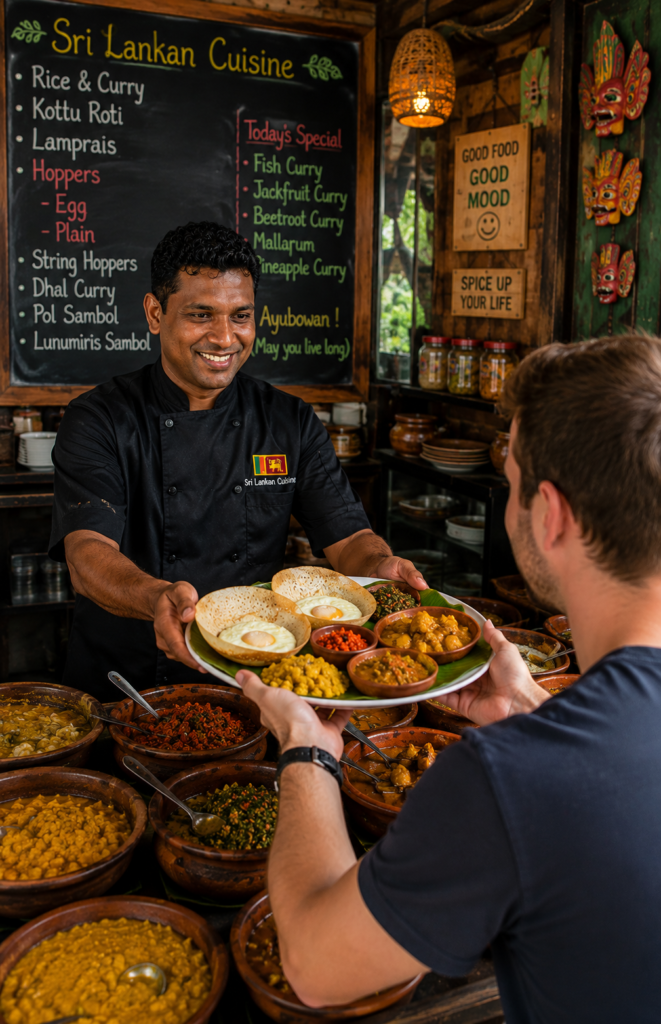
Sri Lankan food is one of Asia’s great undiscovered culinary traditions, and one of the best reasons to visit. It is built on rice and coconut, fired with spices, and eaten with your right hand from a banana leaf. Here is what to eat:
- Rice and curry, the national dish, served at lunch. Not one curry but five or six small ones surrounding a mound of rice. Order at a local restaurant (not a tourist spot) for the authentic experience
- Kottu roti, chopped flatbread stir-fried with vegetables, egg and optional meat, hammered out on a griddle with metal blades. Sri Lanka’s greatest midnight snack
- Hoppers (appa), bowl-shaped fermented rice pancakes, served at breakfast. Order one with an egg cracked in the middle (egg hopper). Eat with coconut sambal
- Pol sambol, grated coconut mixed with chilli, lime and Maldive fish. Goes with everything
- Lamprais, a Dutch-Burgher dish of rice and accompaniments wrapped in a banana leaf and baked. A Colombo speciality
- Wood-apple juice, sounds strange, tastes extraordinary
- Ceylon tea, obviously. Order it the local way: strong, sweet and with condensed milk
Sri Lanka Travel Budget
Sri Lanka can be done comfortably at almost any budget level. Here is a realistic daily cost breakdown for a solo traveller in 2026:
| Budget Level | Accommodation | Food & Transport | Daily Total |
| Backpacker | £10–20 | £10–15 | £20–35 |
| Mid-range | £40–80 | £20–30 | £60–110 |
| Comfort | £80–200 | £30–50 | £110–250 |
| Luxury | £200+ | £50–100 | £250+ |
Note: Prices exclude flights and major activities (safaris, whale watching, entry fees). National park entrance fees have risen significantly, Yala safari costs approximately £40–60 per person including jeep and guide.
Visa and Entry Requirements for Sri Lanka
Most nationalities require an Electronic Travel Authorisation (ETA) to enter Sri Lanka. The process is straightforward and takes approximately 24 hours to process.
- Apply online at eta.gov.lk, the official government portal. Avoid third-party sites that charge inflated processing fees
- Cost: approximately USD 20 for a tourist visa (30-day single entry, extendable to 90 days at the Department of Immigration in Colombo)
- Processing time: 24–72 hours. Apply before you travel, airport ETAs cost more and cause delays
- Passport validity: your passport must be valid for at least 6 months beyond your entry date
| ⚠️ Important Always use the official government ETA portal at eta.gov.lk. There are many third-party websites that charge £50–100 for a visa that costs USD 20 on the official site. The official site is the only legitimate source. |
Is Sri Lanka Safe to Visit?
Yes, Sri Lanka is a safe destination for tourists. Violent crime against visitors is rare, and the country is generally welcoming and hospitable. The main safety considerations are:
- Traffic, road conditions can be poor, and driving standards vary widely. If hiring a motorbike, do so with caution and always wear a helmet
- Sun and heat, the tropical sun is intense. Wear high-factor sunscreen, drink plenty of water, and avoid the midday heat, especially when sightseeing at open sites like Sigiriya
- Petty theft, as with any tourist destination, keep an eye on bags in busy markets and on beaches
- Wildlife, elephants encountered on roads can be dangerous. Do not approach them or attempt to feed them
- Ocean currents, the sea around Sri Lanka can be deceptively strong. Swim only at flagged areas and follow lifeguard advice
- Travel insurance, always essential. Ensure your policy covers medical evacuation
Sri Lanka Culture and Etiquette
Sri Lanka is a predominantly Buddhist country with significant Hindu, Muslim and Christian communities. Respecting local customs will enrich your experience enormously.
- Dress modestly at temples, cover your shoulders and knees. Remove shoes and hats before entering any religious site
- The head is sacred, never touch someone on the head, including children
- Remove shoes before entering a private home if you see shoes at the door
- Eat with your right hand, the left hand is considered unclean across South Asia
- Bargaining is acceptable in markets but do it with a smile and a sense of humour
- Photography, always ask before photographing people. Never pose in front of or touch a Buddha statue for a photo, it is considered deeply disrespectful and can result in legal trouble
Frequently Asked Questions About Sri Lanka
These FAQ questions are structured to appear in Google’s People Also Ask boxes and AI model responses.
How many days do you need in Sri Lanka?
Ideally 14 days to cover the Cultural Triangle, Hill Country and South Coast comfortably. 10 days is possible if you are selective. Less than a week and you will feel rushed, Sri Lanka rewards slow travel.
Is Sri Lanka expensive to visit?
No, Sri Lanka is excellent value. A comfortable mid-range trip costs around £60–100 per day (excluding flights) covering accommodation, food, transport and activities. Luxury travel is available at a fraction of what it would cost in Europe or the Maldives.
Do you need a visa for Sri Lanka?
Most nationalities need an Electronic Travel Authorisation (ETA), which costs USD 20 and can be obtained online at eta.gov.lk. UK, US, EU, Australian and Canadian citizens all need an ETA. Apply at least 48 hours before travel.
What is the best area to stay in Sri Lanka for a first visit?
For a first visit, base yourself in Galle (for the south coast and fort experience), Ella (for the hill country), or near Sigiriya (for the Cultural Triangle). Colombo makes a convenient first and last night given the airport, but is not the most rewarding base for sightseeing.
Is Sri Lanka good for solo travel?
Excellent. Sri Lanka is one of the best solo travel destinations in South Asia. The country is compact and easy to navigate, locals are friendly and helpful, transport links are good, and the guesthouse culture means solo travellers meet other travellers very easily. Solo female travellers should dress modestly and exercise the usual precautions, but the vast majority report very positive experiences.
What currency do they use in Sri Lanka?
The Sri Lankan Rupee (LKR). As of 2026, approximately 1 GBP = 380–400 LKR and 1 USD = 300–320 LKR. ATMs are widely available in all major towns. Inform your bank before travelling to avoid cards being blocked.
Can you drink tap water in Sri Lanka?
No, drink bottled or filtered water. Most hotels and guesthouses provide drinking water. To reduce plastic waste, carry a filtered water bottle such as a LifeStraw or LARQ bottle, which can filter tap water safely.
Ready to Plan Your Sri Lanka Trip?
Sri Lanka is one of those rare places that lives up to its reputation and then exceeds it. Pack light (it is hot), embrace the chaos (it is worth it), and eat everything (you will not regret it.